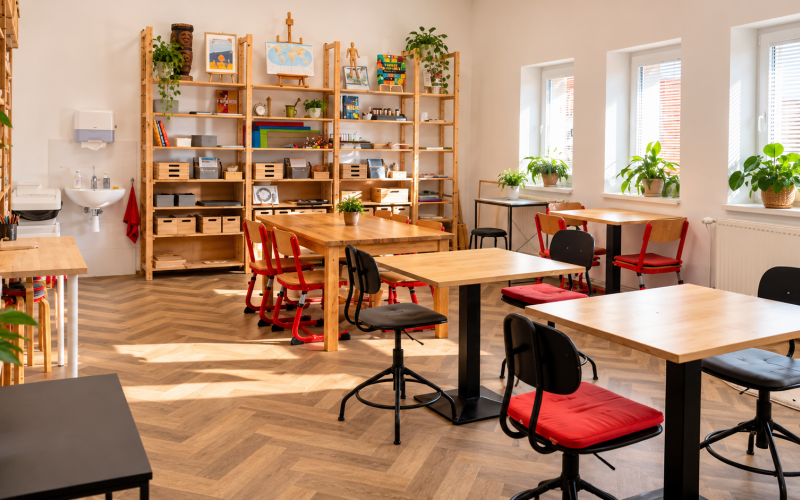
Elementary I – the first three-year cycle, where children discover the world
We are convinced that the most important years in a child's education are not secondary school or university, but the first twelve years of life. Elementary I is where school begins: grades 1 to 3 in one mixed-age class.
Children play an active role in the learning process
It is in the first twelve years that children form their sense of the world, their character and self-image, their basic skills and knowledge – and how they will come to appreciate the diversity of the world's art and cultures. With the help of their teachers, our children discover their own potential.
In the first three-year cycle, children build on what they know from kindergarten: they work with concrete materials, learn to read, write and count at their own pace, and hear the Great Lessons of cosmic education for the first time.
The aim of our primary education is to develop in children academic eagerness, a creative mind, strong character, a spirit of service to others and a sense of belonging with other people in the world.
All this goes beyond the bounds of traditional education, and our primary school has set itself the goal of being an exceptional school in this respect.
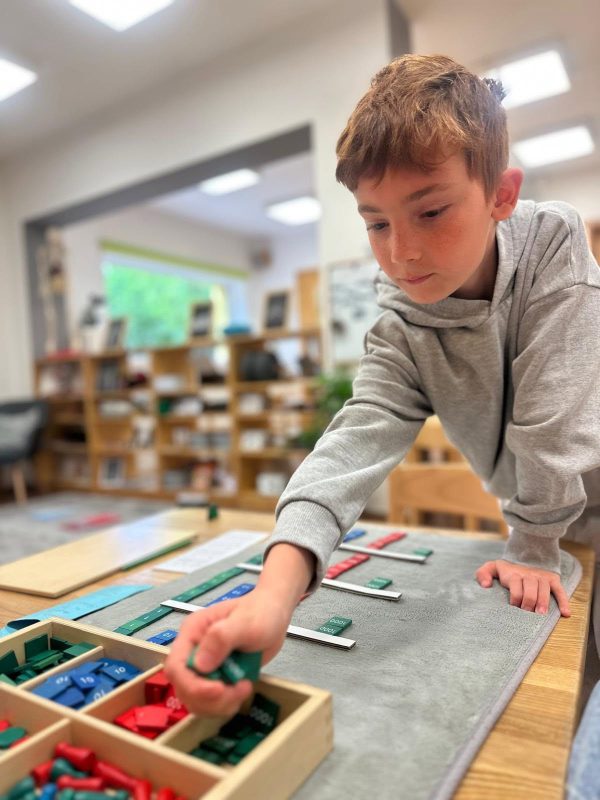
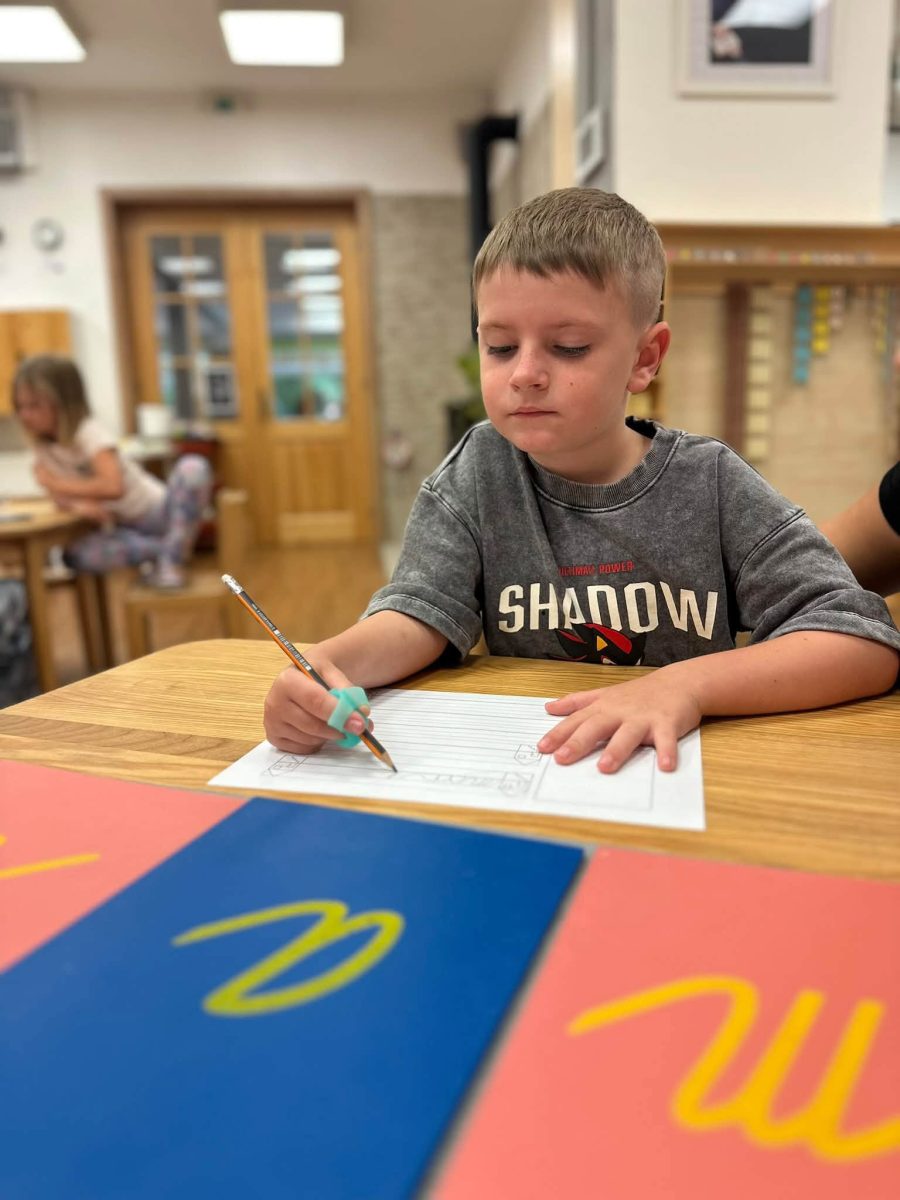
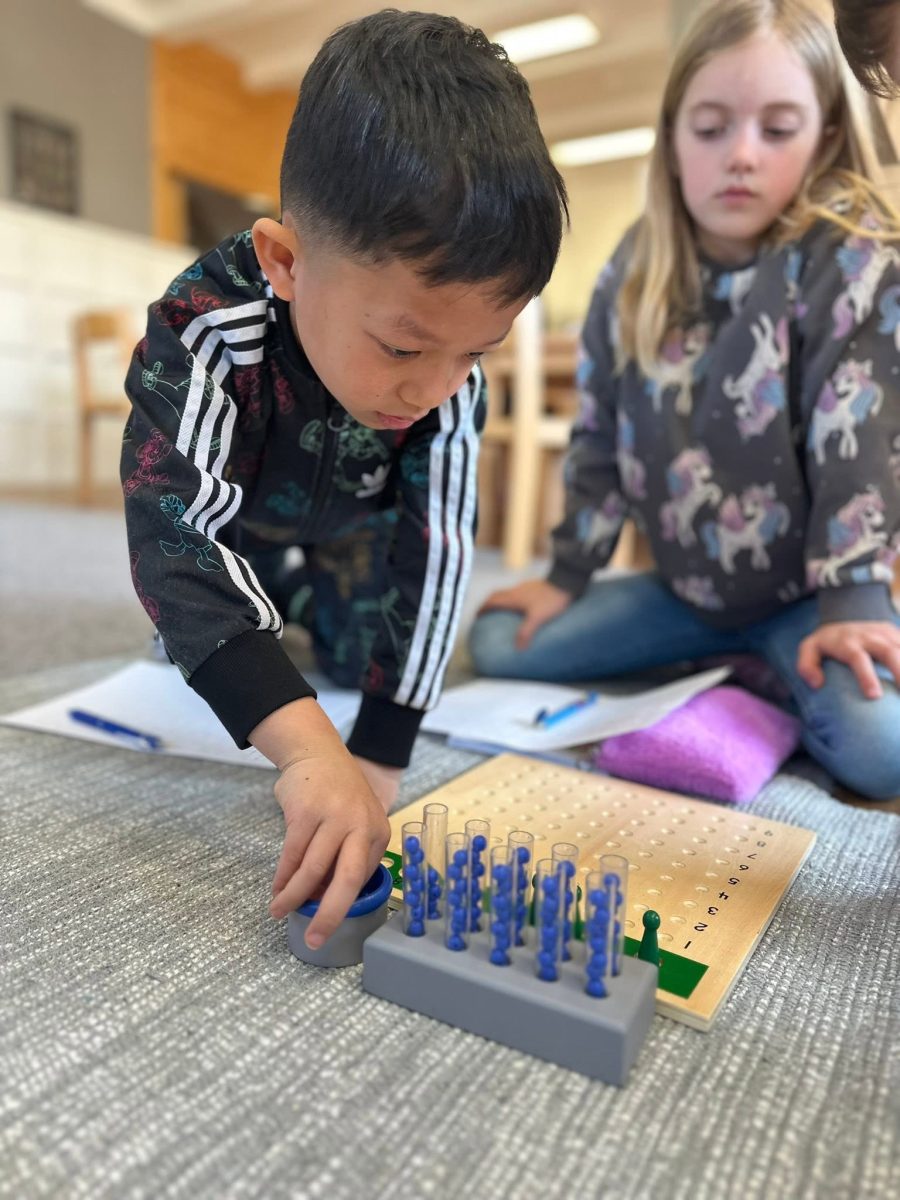
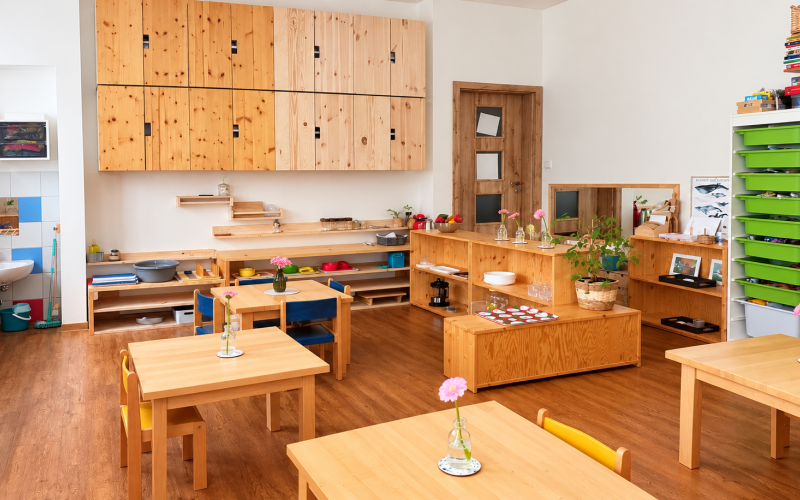
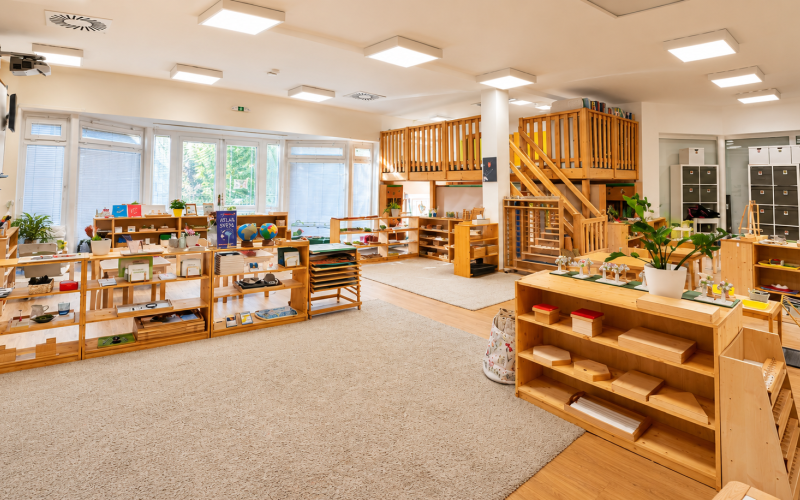
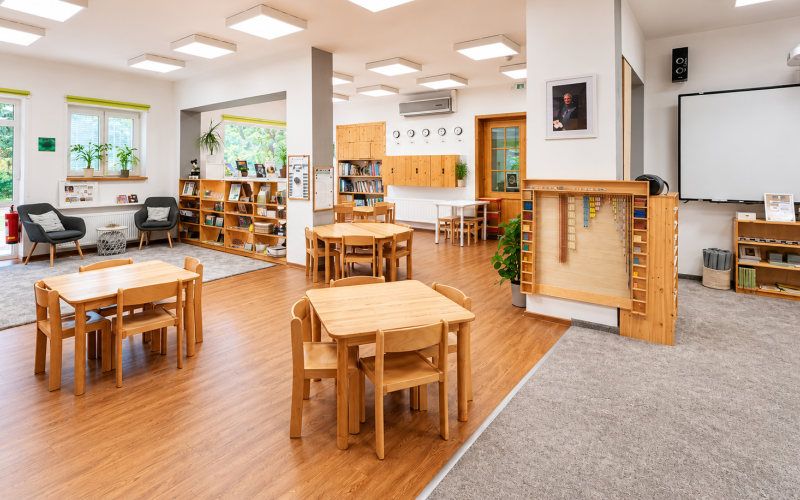
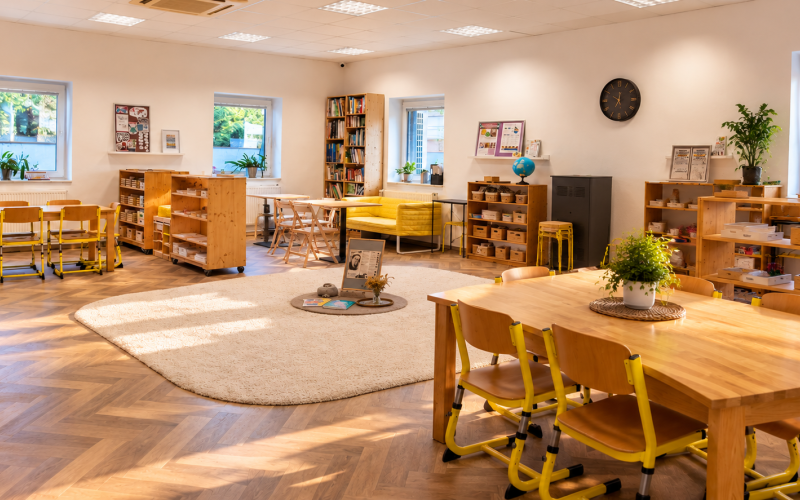
Photos from the class


Learning through experience, first-hand and with the heart
- We build on the child's developmental stages and interests.
- A prepared, stimulating environment for mixed-age classes of children aged 6–15.
- A Czech-English environment.
- University-educated, Montessori-trained teachers.
- The teacher as a guide who inspires and motivates children – not as a towering authority.
- The child is equal to the adult in human dignity.
- The aim of this developmental stage is to discover the world and how it works.
- Learning in context.
- Daily work with Montessori materials with a built-in control of error.
- Verbal (descriptive) assessment. No rewards or punishments. Mistakes as friends.
- Classrooms with wi-fi and the option of working with modern technology every day.
- An education that answers the needs of today's world – a path to knowledge, to life, to languages, to other people and to oneself.
- Plenty of room for the child's explorer mentality, creativity and personal growth, in the classroom and outdoors.
- Good character and joy in learning are the priorities, not memorising facts.
- Cultivating good manners, kindness and fair play.
- Harmonious relationships between teachers and pupils.
- Parent and teacher as joint guides on each child's path of development.
- An open, multicultural, intergenerational space for whole families.
Like a family
Our children learn in an environment where children from 6 to 9 interact with one another. The younger ones watch the older ones at work; the older ones help the younger ones. A six-year-old will quite naturally go and ask an eight-year-old for help – and the eight-year-old remembers far better than any adult what difficulties they faced themselves at six.
Do you have two children at home, one about to start school and the other getting ready for kindergarten? We offer everything in one place: children from 2 to 15 in classes that follow on from one another. No more daily logistics of ferrying children between schools, kindergartens and clubs.
The school is open daily from 7:00 to 16:30. All our teachers are Montessori-trained and are joined by English-speaking teachers.
Everything is connected
How does it work? How big is the universe? Why did the dinosaurs die out? School-age children are not satisfied with a simple answer – they want to know why. Cosmic education lets them understand the world around us and realise that we are all an essential part of it and that each of us has our own “cosmic task”.
We convey it through the Great Lessons: the origin of the universe, the development of life on Earth, the coming of humans, the origin of numbers and writing. In Montessori we do not move from the details to the whole, but the other way round. The stories are an introduction to biology, geography, history, physics and chemistry, and we tell them a little differently every year.
If an area catches the children's interest, they work on their own project – with encyclopaedias, a computer or an iPad – and present it to the others. In this way they practise reading, writing and sorting information as well as soft skills: speaking, cooperating, being creative and looking at themselves critically.
Two Montessori blocks and plenty of time outdoors
For the children's work we mainly use original AMI-approved Nienhuis Montessori materials from the Netherlands, and tablets are available too.
The classroom is functional, attractive and cosy – children and adults alike feel more at home than at school in it.
The after-school club is open from 7:00 to 7:30, from 11:45 to 13:00 and from 14:30 to 17:00. We also try seasonal sports: skiing and ice skating in winter, swimming, and cycling and roller skating in summer.
- from 7:00
Morning after-school club
The children choose for themselves what they will do.
- from 7:30
Arrival in the home classroom
- 8:15–11:15
Morning Montessori block
Work with the materials and on projects. The snack is within the children's reach and they help themselves.
- 11:30
Lunch
- 12:00
Time outdoors
A breath of fresh air after a demanding morning's work.
- 13:00–14:30
Afternoon Montessori block
This includes community time: we talk about the things that need talking about, about social habits, traditions and holidays, and we play games for releasing emotions and about fair play.
- 14:30–17:00
Snack and after-school club
As much of the afternoon as possible outdoors in the fresh air. Fun guaranteed.
How much does it cost?
Tuition and meal prices for all programmes are on one page.
How we compare with other schools
Every year we take part in SCIO national testing, which is held in schools across the Czech Republic.
It lets us check the children's knowledge and see how the school compares with others.
The children rank highly in all subjects. The grade 3 results are below.
Guides of the first three-year cycle
Elementary School – Elementary I
Two parallel Montessori classes: Elementary I SUN and Elementary I MOON.
 Martin BorekDeputy Head of Preschool and Elementary Education, Montessori Guide, Special Education Teacher, Prevention & Marketing Specialist
 Nikča NájemníkováMontessori Guide & Play Wisely instructor
 Kate ZubalEnglish speaking teacher & Garden coordinator
 Sunny MúdráMontessori Guide
 Martina KarbanováMontessori guide
 Adelle PechancováEnglish-speaking teacher
 Marcelka BendováMontessori Assistant & leisure time educator
 Míša HornychováMontessori Assistant & leisure time educator
Come and visit the school
Book a visit with Martin Borek, deputy head for the kindergarten and the first three-year cycle.